
Your Garage Door Is Trying to Tell You Something
Every garage door makes some noise when it opens and closes. But there's a big difference between the normal hum of a well-maintained door and the grinding, screeching, or banging that wakes up the entire house at six in the morning.
If your garage door has gotten noticeably louder, that sound is almost always pointing to a specific problem. The good news is that most noisy garage door issues are fixable — and catching them early can save you from a much bigger repair bill down the road.
Here in Round Lake Beach, where garage doors take a beating from temperature swings, humidity, and daily use, noise complaints are one of the most common calls we get. Let's break down what each sound means and what you should do about it.
Grinding or Scraping Sounds
A grinding or scraping noise usually means metal is rubbing against metal somewhere it shouldn't be. The most common culprits are:
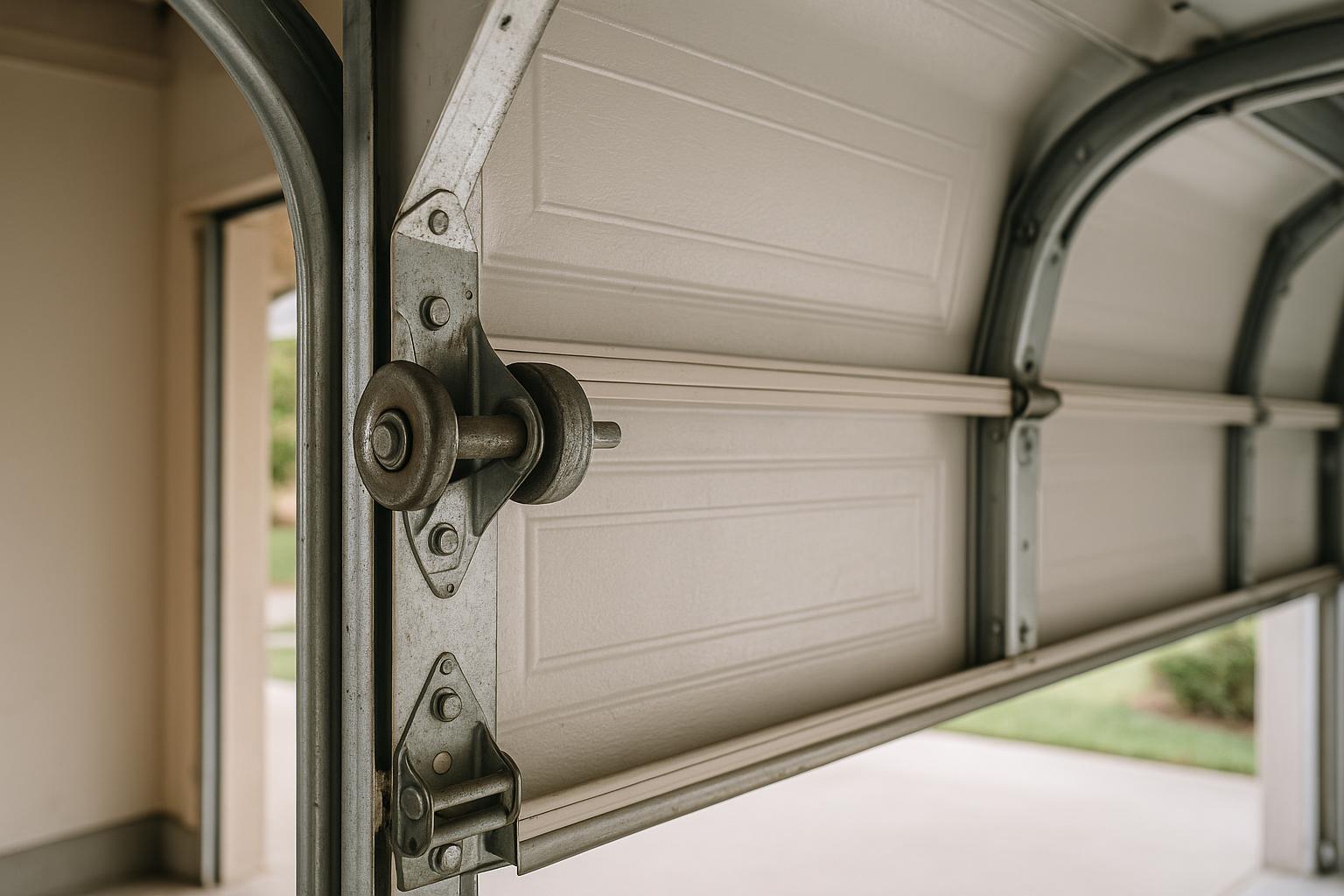
- Worn rollers: Steel rollers wear down over time and start grinding against the track. If your rollers are original to the door and more than five to seven years old, they're likely the source. Upgrading to nylon rollers eliminates this noise almost entirely and reduces vibration throughout the door system.
- Misaligned tracks: If the vertical or horizontal tracks have shifted even slightly, the door can scrape against them as it moves. You might also notice the door hesitating or jerking during operation.
- Dry bearings: The bearings in your rollers, pulleys, and spring system need lubrication. Without it, they grind and create friction that accelerates wear on every moving part.
If you hear grinding, start by visually inspecting your rollers and tracks. Look for metal shavings or visible wear marks. A quick application of garage door-specific lubricant can sometimes quiet things down, but worn rollers and bent tracks need professional attention.
Squealing or Squeaking Sounds
High-pitched squealing is one of the most common — and most annoying — garage door noises. It almost always comes down to one thing: lack of lubrication.
Your garage door has dozens of moving parts that need to stay lubricated to function quietly. The hinges, rollers, springs, and bearing plates all create friction during every open-and-close cycle. When that lubrication dries out, you get the squeal.
Here's what to do:
- Use a silicone-based or lithium-based garage door lubricant — never WD-40, which is a solvent and not a long-term lubricant.
- Apply it to all hinges, roller stems, the torsion spring, and the bearing plates on either side of the spring.
- Run the door up and down a few times to distribute the lubricant evenly.
If the squealing persists after lubrication, the rollers or hinges themselves may be worn out and need replacement. This is especially common in older homes around Round Lake Beach where the original hardware has never been swapped out.
Rattling or Vibrating Sounds
Rattling usually points to something loose. Garage doors are assembled with nuts, bolts, and brackets that can loosen over time due to the constant vibration of daily use. Common sources include:
- Loose hardware: Check the brackets that hold the tracks to the wall and ceiling, the hinges connecting the door panels, and the bolts on the opener mounting bracket. Tighten anything that's come loose with a socket wrench.
- Loose chain or belt: If you have a chain-drive opener, a sagging chain will slap and rattle during operation. Belt-drive openers can also develop slack over time. Both can be adjusted, but if you're not comfortable working around the opener mechanism, it's best to call a technician.
- Vibrating opener: Sometimes the opener unit itself vibrates against the ceiling. Anti-vibration pads or a rubber mounting kit can solve this quickly and inexpensively.
Rattling is usually the easiest noise to fix yourself, but don't ignore it. Loose hardware puts extra stress on other components and can lead to bigger problems if left unchecked.
Banging or Popping Sounds
A loud bang or pop during operation is more concerning. This can indicate:
- Torsion spring issues: A popping sound when the door starts moving can mean the spring is binding or the coils are rubbing together. Springs under tension are dangerous to work on — this is always a job for a professional.
- Panel flex: If the door panels are flexing or bowing during operation, they can create a banging sound as they snap back into position. This sometimes happens with lightweight or damaged panels.
- Opener force settings: If the opener's force settings are too high, it can slam the door into the fully open or closed position with more impact than necessary. Adjusting the force and travel limits on your opener can eliminate this.
If you hear a sudden loud bang when you're not operating the door, that could be a spring that has already broken. Do not attempt to open the door manually or with the opener until a technician has inspected it.
Clicking Sounds
A rhythmic clicking as the door moves is often related to the opener's drive mechanism. In chain-drive openers, a clicking sound can mean the chain has too much slack or the sprocket is wearing out. In some cases, it can also indicate a problem with the opener's gear assembly.
A clicking sound that happens only when you press the remote or wall button — but the door doesn't move — usually means the opener is receiving the signal but the motor or gears aren't engaging. This typically requires professional diagnosis.
When to DIY and When to Call a Pro
Some garage door noises are easy to address on your own. Lubrication, tightening loose bolts, and adjusting the chain tension are all reasonable DIY tasks for a handy homeowner. But there are clear lines you shouldn't cross:
- Never attempt to adjust or replace torsion springs yourself. These are under extreme tension and can cause serious injury.
- Don't try to realign tracks without proper tools and experience. A misaligned track can cause the door to come off the rails entirely.
- If the noise is new, sudden, or getting worse quickly, have a professional inspect the door before continuing to use it.
For homeowners in Round Lake Beach and the surrounding Lake County communities — including Grayslake, Mundelein, and Hainesville — we offer thorough inspections that identify the source of the noise and fix it before it turns into a breakdown.
A Quiet Garage Door Is a Healthy Garage Door
Your garage door is the largest moving part of your home, and it works hard — most residential doors open and close over a thousand times a year. A little noise is normal, but a change in sound is always worth investigating.
Pay attention to what your garage door is telling you. A few minutes of lubrication or a quick hardware check can extend the life of your door system by years. And when the noise points to something more serious, getting it handled early is always cheaper than waiting for a full failure.
If your garage door has been getting louder and you're not sure what's causing it, Round Lake Beach Garage Door can diagnose the problem and get your door running quietly again. Give us a call and we'll take a listen.