
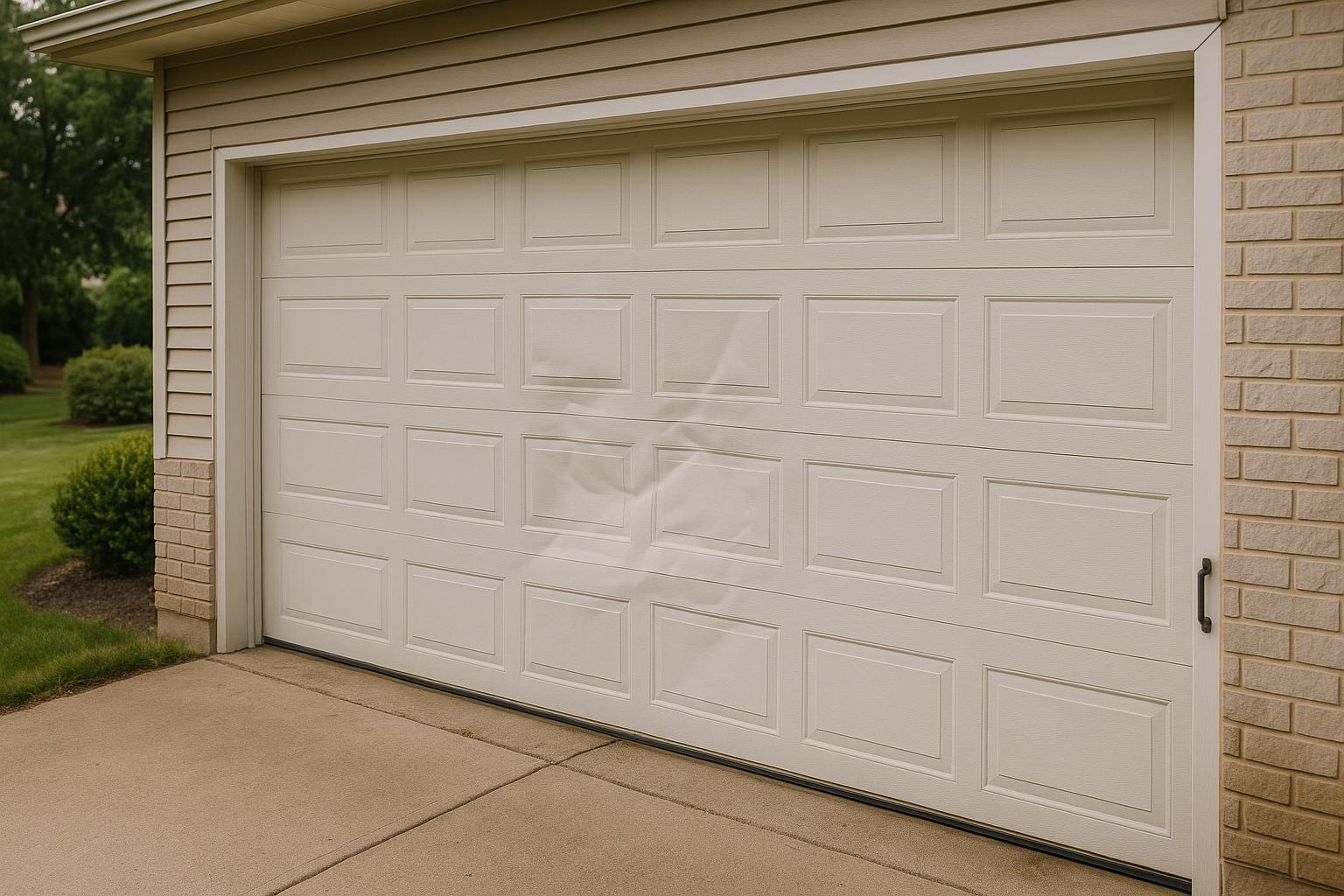
That Dented Panel Is Staring at You Every Day
Maybe you backed into it. Maybe a basketball took an unfortunate bounce. Or maybe a nasty storm rolled through Round Lake Beach and left your garage door with a cracked or bent panel. Whatever happened, you're now staring at the damage and wondering: Can I just replace that one panel, or do I need an entirely new garage door?
It's one of the most common questions we get from homeowners, and the answer isn't always straightforward. The right choice depends on the extent of the damage, the age of your door, and whether replacement panels are still available for your model. Let's break it all down so you can make a confident decision.
When a Single Panel Replacement Makes Sense
Replacing just one panel is often the most cost-effective route, but it only works under certain conditions. Here's when a panel replacement is typically a good call:
- The damage is limited to one or two panels. If the rest of your door is in solid shape and only one section took the hit, there's no reason to scrap the whole thing.
- Your door is relatively new. If your garage door is less than 10 years old, the manufacturer likely still produces matching panels. This makes it easy to get an exact replacement that blends right in.
- The tracks, springs, and hardware are fine. Panel damage from a minor impact usually doesn't affect the mechanical components. If everything else is working properly, a panel swap keeps your door running without the expense of a full installation.
- You want to preserve your current door style. Maybe you love the look of your door or it matches your home's exterior perfectly. Replacing a single panel lets you keep that curb appeal intact.
A single panel replacement typically costs a fraction of what a new door would run, making it an attractive option when the conditions are right.
When You Should Consider Replacing the Entire Door
Sometimes a panel replacement sounds appealing but doesn't actually make financial or practical sense. Here are the situations where a full garage door replacement is the smarter investment:
- Your door is old and panels are discontinued. Garage door manufacturers regularly update their product lines. If your door is 15 or 20 years old, there's a good chance the exact panel style, color, or size is no longer available. Mismatched panels look awkward and can affect how the door operates.
- Multiple panels are damaged. If three or four panels need replacing, the cost starts approaching what you'd pay for a brand-new door. At that point, you're better off investing in a full replacement and getting a door with a fresh warranty.
- The door has structural issues. A hard impact can warp the tracks, bend the hinges, or throw the entire door out of alignment. If the damage goes beyond the panel surface, patching one section won't solve the underlying problem.
- You're dealing with recurring problems. If your garage door has been giving you trouble for a while — sticking, making noise, not sealing properly — a damaged panel might be the push you need to upgrade to a newer, more reliable door.
- Energy efficiency matters to you. Older garage doors often lack insulation. If you use your garage as a workshop, gym, or extra living space, a new insulated door can make a noticeable difference in comfort and energy costs, especially during Round Lake Beach winters.
How to Tell If Your Panel Can Be Matched
One of the first things we do when a homeowner calls about panel damage is identify the door's manufacturer, model, and color. This information is usually printed on a label on the inside of the door or along the edge of one of the panels. Here's what we look for:
- Manufacturer name and model number
- Panel design — raised, recessed, flush, carriage style, etc.
- Color and finish
- Panel dimensions — width, height, and thickness
If we can source an exact match, a panel replacement is straightforward. If we can't, we'll let you know upfront and walk you through your options for a full replacement. We'd rather give you honest advice than stick you with a mismatched door that looks off.
A Note on Steel vs. Wood Panels
Steel garage door panels are generally easier to match and replace because they're manufactured in standard sizes and widely available. Wood panels, on the other hand, can be trickier. Custom wood doors may require a carpenter or specialty fabricator to create a matching section, which adds time and cost. If you have a wood garage door with panel damage, it's worth getting a professional assessment before assuming a quick fix is possible.
What About the Color Match?
Even when you find the right panel, color can be a sticking point. Your existing door has been exposed to sun, rain, and snow for years. A brand-new panel in the same factory color might look slightly different next to your weathered panels. In most cases the difference is subtle and fades over time as the new panel weathers to match. But if your door has significant sun fading, the contrast can be noticeable.
Some homeowners choose to repaint the entire door after a panel replacement to create a uniform look. It's a small extra step that makes a big difference in curb appeal.
Can You DIY a Garage Door Panel Replacement?
We understand the temptation to save money and handle it yourself, but we strongly recommend against DIY panel replacement. Here's why:
- Garage doors are heavy. A standard two-car garage door can weigh 200 to 300 pounds. Removing and installing panels without proper equipment is dangerous.
- Spring tension is involved. The door's springs are under extreme tension. Disturbing the panel arrangement without releasing that tension correctly can cause serious injury.
- Alignment is critical. A panel that's even slightly off can cause the door to bind, jump the tracks, or fail to seal properly. Professional technicians have the tools and experience to get the fit right the first time.
This is one of those jobs where calling a professional isn't just convenient — it's the safe choice.
How We Handle Panel Damage in Round Lake Beach
When you call Round Lake Beach Garage Door about a damaged panel, here's what to expect:
- We inspect the damage. We'll look at the affected panel, the surrounding panels, and the mechanical components to assess the full scope of the issue.
- We identify your door. We'll track down the manufacturer, model, and panel specifications to determine whether a matching replacement is available.
- We give you honest options. If a panel replacement makes sense, we'll quote it. If a full door replacement is the better investment, we'll explain why and help you choose a new door that fits your home and budget.
- We get it done. Whether it's a single panel swap or a complete installation, we handle the job efficiently so you can get back to your routine.
Don't Let a Damaged Panel Become a Bigger Problem
A cracked or dented panel might seem like a cosmetic issue, but it can lead to real problems if you ignore it. Damaged panels compromise the seal of your garage door, letting in moisture, pests, and cold air. They can also affect the balance of the door, putting extra strain on your springs and opener. The longer you wait, the more likely a small repair turns into a bigger one.
If you're dealing with garage door panel damage in Round Lake Beach, Grayslake, Mundelein, or anywhere in the surrounding Lake County area, give us a call. We'll help you figure out the best path forward — no pressure, no upselling, just straightforward advice and quality work.