
Your Garage Door Springs Are Under More Stress Than You Think
Every time your garage door opens and closes, the springs do the heavy lifting — literally. A standard two-car garage door can weigh between 150 and 250 pounds, and the springs are responsible for counterbalancing all of that weight. Over time, the metal fatigues, and eventually, those springs will fail.
The good news? Springs rarely break without warning. If you know what to look for, you can catch the problem early and schedule a replacement on your terms — instead of dealing with a door that won't budge on a freezing Round Lake Beach morning when you're already running late for work.
Here's how to tell your garage door springs are nearing the end of their life and what you should do about it.
How Long Do Garage Door Springs Last?
Most standard torsion springs are rated for approximately 10,000 cycles. One cycle equals one full open and one full close. If your household opens and closes the garage door four times a day, that's roughly 1,460 cycles per year — meaning your springs could last about seven years under normal use.
However, several factors can shorten that lifespan:
- Heavier doors put more strain on springs and wear them out faster.
- Lack of maintenance — springs that aren't lubricated regularly develop more friction and fatigue sooner.
- Temperature swings — here in the Round Lake Beach area, our harsh winters and humid summers cause the metal to expand and contract repeatedly, accelerating wear.
- Rust and corrosion weaken the coils and reduce their effective lifespan.
If your springs are more than five or six years old and you've never had them inspected, it's worth taking a closer look.
7 Warning Signs Your Springs Are Failing
1. The Door Feels Heavier Than Usual
Try this simple test: pull the emergency release handle to disconnect the opener, then manually lift the door about halfway. A properly balanced door should stay in place on its own. If it feels extremely heavy or slams back down, your springs are losing tension and can no longer support the door's weight.
2. The Door Opens Slowly or Unevenly
When springs weaken, the opener has to work harder to lift the door. You might notice the door rising more slowly than it used to, or one side lifting faster than the other. Uneven movement is especially common when one spring in a two-spring system is weaker than the other.
3. You Hear a Loud Bang From the Garage
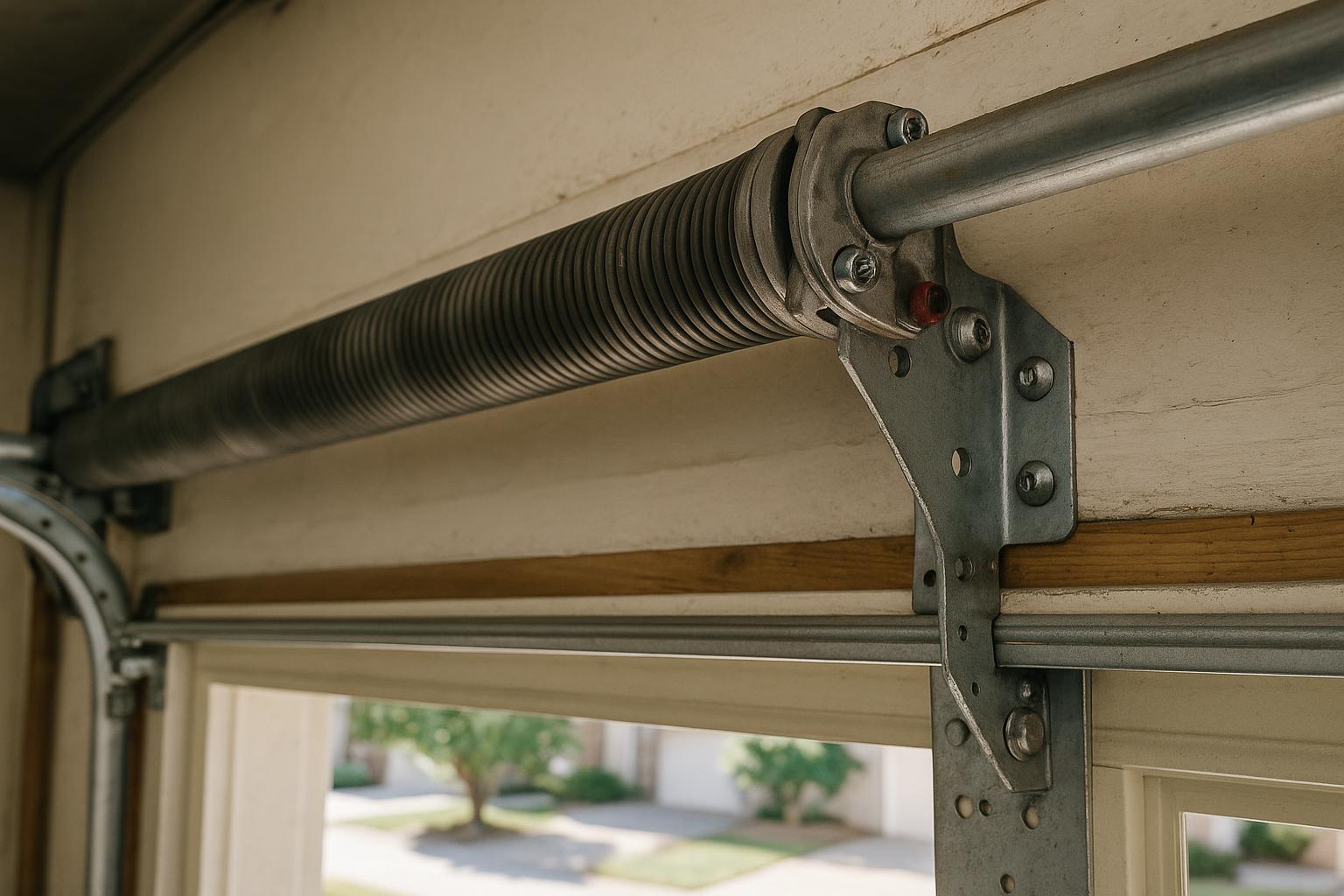
If you heard a loud bang — almost like a gunshot — coming from your garage, there's a strong chance a spring just snapped. A broken torsion spring unwinds violently and makes a startling noise. Check the springs above your door. A broken spring will have a visible gap in the coil.
4. Visible Gaps or Stretched Coils
Take a moment to visually inspect your springs. Healthy torsion springs have tightly wound, evenly spaced coils. If you see a gap where the coil has separated, or if the coils look stretched out and loose, the spring is either broken or close to it.
5. The Opener Struggles or Stops Mid-Cycle
Your garage door opener is designed to lift a balanced door, not dead weight. When springs fail, the opener strains to compensate. You might notice the motor running louder, the door stopping partway up, or the opener's safety features kicking in and shutting it down. Continuing to run the opener with bad springs can burn out the motor entirely.
6. The Door Won't Stay Open
A garage door that slowly drifts closed on its own — or won't stay open at all — is a clear sign of spring trouble. This is also a safety hazard, especially if you have children or pets who pass under the door.
7. Rust on the Springs
Rust is a spring killer. It increases friction between the coils as they wind and unwind, and it weakens the structural integrity of the metal. If your springs have visible rust, their remaining lifespan is significantly reduced. Regular lubrication with a silicone-based spray can slow rust formation, but once corrosion is advanced, replacement is the safest option.
Why You Shouldn't Replace Garage Door Springs Yourself
We understand the DIY temptation. But garage door springs are under extreme tension, and attempting to remove or install them without the proper tools and training can result in serious injury. Torsion springs, in particular, store enough energy to cause broken bones or worse if they release unexpectedly.
Professional technicians use specialized winding bars, clamps, and safety equipment to handle spring replacements safely. The job typically takes less than an hour for an experienced tech, and you'll have peace of mind knowing the springs are correctly sized, properly tensioned, and safely installed.
Should You Replace Both Springs at Once?
If your garage door uses a two-spring system and only one has broken, we strongly recommend replacing both at the same time. Here's why:
- Both springs were installed at the same time and have the same number of cycles on them. If one broke, the other is close behind.
- Replacing both ensures even tension and balanced door movement.
- You'll save on labor costs since the technician is already there with the door disassembled.
Many homeowners in Round Lake Beach and surrounding communities like Grayslake and Mundelein have learned this lesson the hard way — replacing one spring only to have the second one snap a few weeks later.
What to Do If Your Spring Breaks
If a spring has already broken, here's what you should do immediately:
- Do not try to open the door using the opener. This can damage the opener motor and the door itself.
- Do not attempt to manually lift the door. Without spring support, the full weight of the door is unsupported, and it can come crashing down.
- Call a professional. A trained garage door technician can safely replace the springs and have your door operational again quickly.
If your car is trapped inside and you need to get to work, let the technician know when you call so they can prioritize your service. At Round Lake Beach Garage Door, we offer emergency garage door service for exactly these situations.
Preventive Maintenance Extends Spring Life
You can get more years out of your springs with some basic preventive care:
- Lubricate the springs every three to four months with a garage door-specific or silicone-based lubricant. Avoid WD-40 — it's a solvent, not a lubricant.
- Schedule annual inspections so a technician can check spring tension, balance, and overall condition.
- Keep the door balanced. If the door is out of balance, the springs work harder with every cycle.
- Address small problems early. Strange noises, slow operation, or jerky movement are all signs that something needs attention before it becomes a bigger issue.
A little maintenance goes a long way toward avoiding an unexpected breakdown — especially during the busiest times of year when you're relying on your garage door every single day.
Keep Your Garage Door Running Safely
Your garage door springs are one of the hardest-working components of your home, and they deserve attention before they fail. If you've noticed any of the warning signs above, or if it's been a few years since your last inspection, don't wait for a breakdown to take action.
Round Lake Beach Garage Door provides expert spring replacement and preventive maintenance for homeowners throughout Round Lake Beach, Hainesville, Lake Villa, and the greater Lake County area. Give us a call, and we'll make sure your door is safe, balanced, and ready to perform.